12 Oct 2026
Dissecting reward pathways in progressive prize environments through membership level interactions on British digital gaming platforms

British digital gaming platforms operate complex reward systems where progressive prize pools grow through player contributions across multiple games and sessions, and membership levels determine how those pools distribute over time. These environments combine tiered loyalty structures with accumulating jackpots so that higher membership ranks unlock faster access to prize segments and modified contribution rates that accelerate pool growth for those participants.
Progressive prize mechanics on UK platforms
Progressive jackpots accumulate when a small percentage of each wager feeds into a shared pool that resets only after a win occurs, and British operators track these contributions separately from standard game returns. Data from industry reports show that pools on major platforms often reach several million pounds before triggering, while membership tiers adjust the rate at which players advance toward bonus draws or guaranteed minimum payouts within those pools. Observers note that lower tiers typically receive standard contribution multipliers, whereas mid and upper tiers gain access to accelerated accumulation segments that multiply their share of future draws without increasing personal stake amounts.
Membership level structures and tier interactions
Operators segment players into five to seven membership bands based on cumulative wagering volume, deposit frequency, and account tenure, with each band carrying distinct rules for jackpot eligibility and reward velocity. Research indicates that entry-level members contribute to the main pool at baseline rates while higher bands receive supplementary entries into secondary prize layers that draw from the same progressive total yet operate on independent trigger thresholds. Those who have studied these systems find that tier advancement often coincides with changes in notification timing and prize allocation visibility, allowing upper-level members to monitor pool growth through dedicated dashboards that lower tiers cannot access until specific volume milestones are met.
Pathway analysis through tiered interactions
Pathways emerge when membership upgrades alter both the speed of pool contribution and the probability weighting assigned to each participant in the draw algorithm, and analysts track these shifts across thousands of active accounts on smartphone and desktop interfaces. Evidence suggests that players who move from standard to premium bands experience a measurable increase in draw frequency for smaller progressive segments even though overall pool percentages remain fixed, creating distinct reward velocity curves that researchers map against time spent at each tier. One study revealed that these velocity differences compound over multi-month periods because upper-tier accounts retain eligibility for rollover contributions that feed back into the same progressive environment after partial payouts occur.
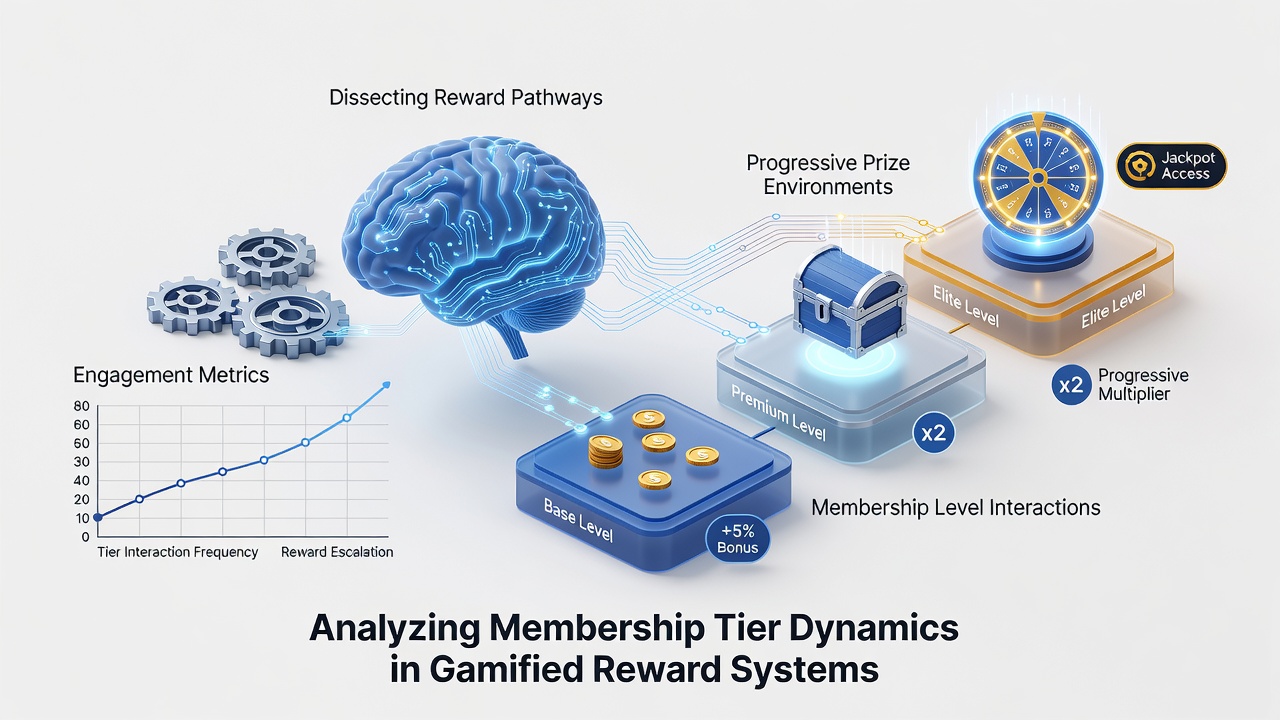
Platform data further shows that October 2026 regulatory adjustments may require clearer disclosure of how tier status influences progressive allocation percentages, prompting several operators to publish updated pathway diagrams ahead of the scheduled review window. Meanwhile, cross-platform comparisons indicate that membership-driven reward pathways remain consistent across major British sites even when jackpot themes and minimum bet requirements differ, because the underlying tier logic governs contribution multipliers and draw eligibility rather than game-specific rules.
Observed patterns in reward delivery
Patterns emerge most clearly when analysts segment account activity by tier duration and jackpot participation rates, revealing that mid-tier accounts often record the steepest gains in prize claim frequency during the first six months after promotion. Figures from gaming research organizations demonstrate that these gains stabilize once accounts reach top tiers because the contribution multipliers plateau while the absolute prize pool continues to grow through aggregate player volume. Those who've examined retention metrics across multiple operators note that the interaction between progressive environments and membership levels produces measurable differences in session length and return visit intervals, particularly when upper tiers receive early access to pool snapshots that lower tiers view only after delays.
External monitoring groups continue to collect anonymized transaction data that maps these pathways without identifying individual accounts, and reports from the National Council on Problem Gambling highlight how tiered eligibility rules affect the distribution of large payouts across player segments. Similar analyses conducted by the Australian Gambling Research Centre confirm that comparable membership structures produce parallel reward velocity effects when progressive pools operate under consistent contribution formulas.
Conclusion
The dissection of reward pathways in progressive prize environments on British digital gaming platforms centers on measurable interactions between membership tiers and jackpot contribution mechanics that determine both accumulation speed and draw eligibility. Platform records and third-party analyses continue to document how tier advancement modifies reward velocity while regulatory developments scheduled for October 2026 may increase transparency around these allocation rules. Observers tracking these systems report that the underlying patterns remain stable across operators even as specific jackpot themes and notification methods vary.